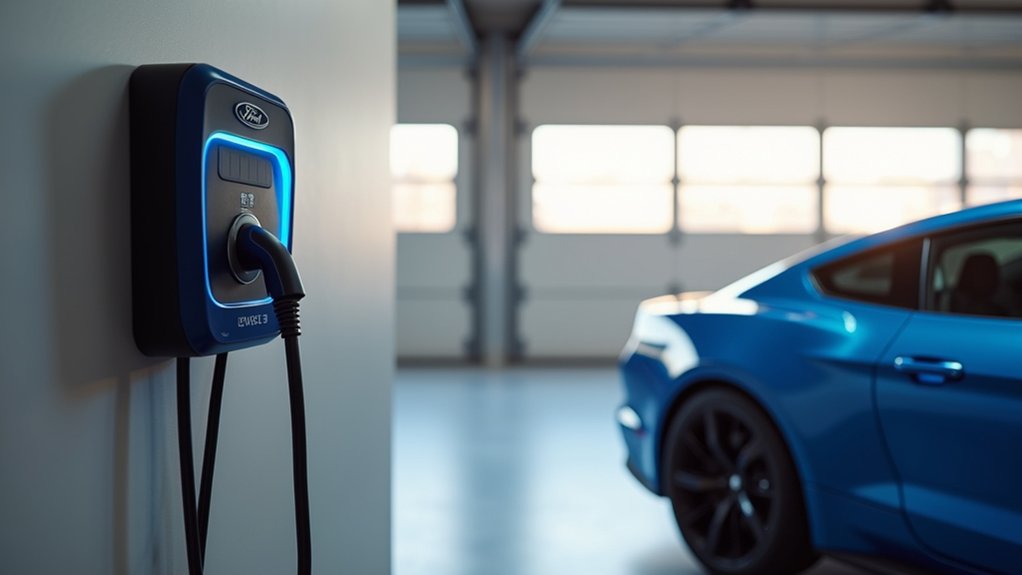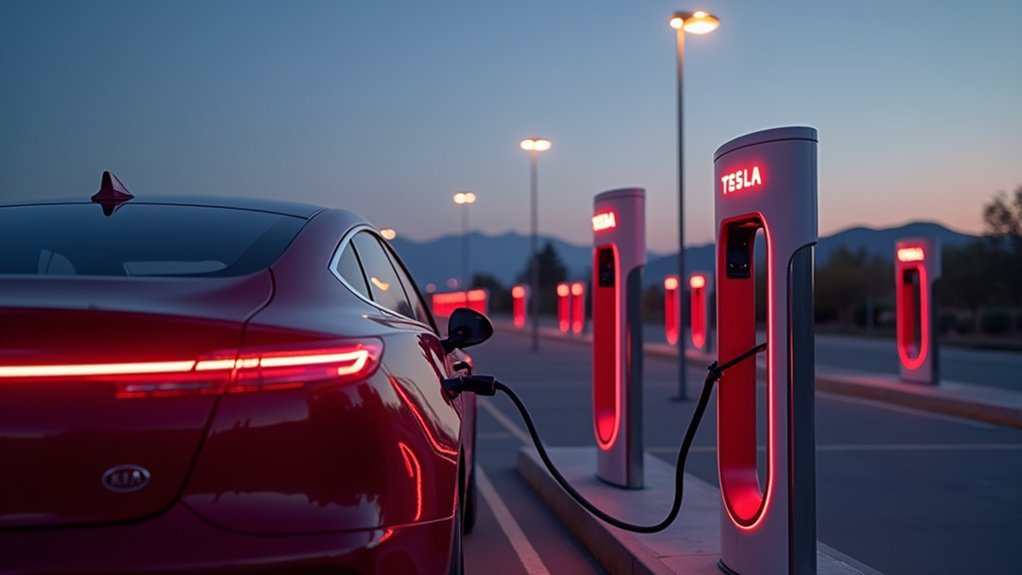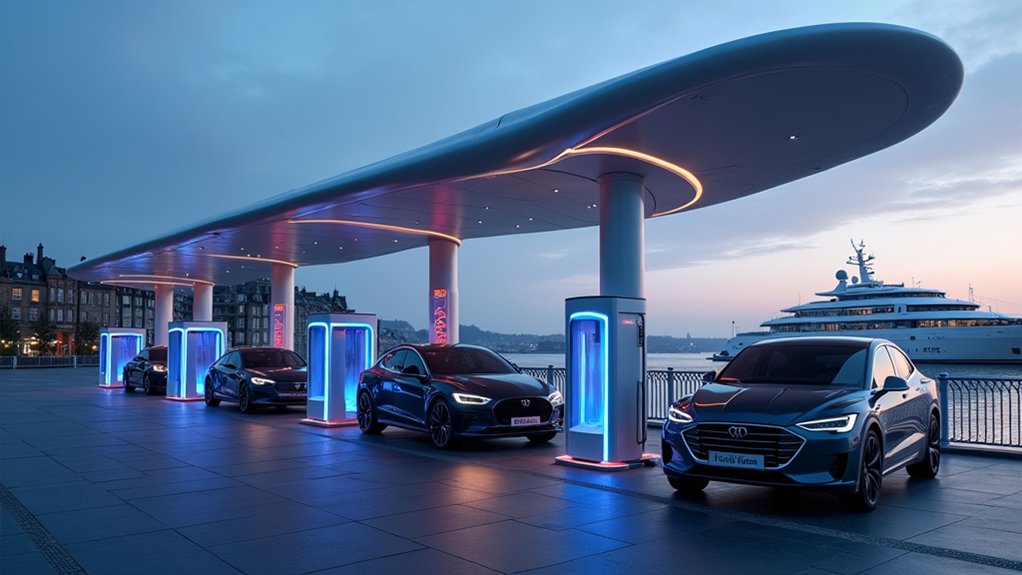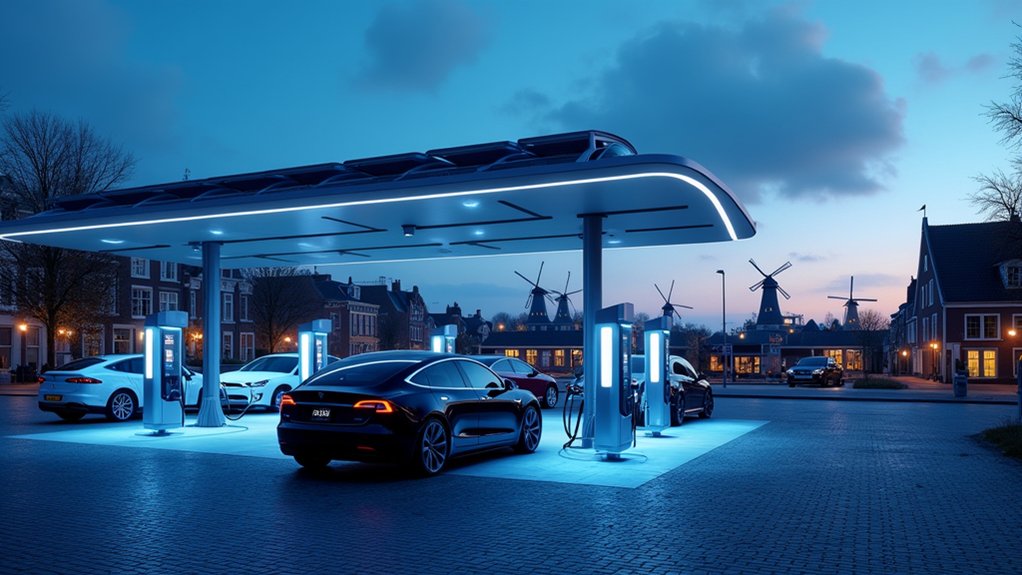
While many European cities struggle to build adequate charging infrastructure, Amsterdam has emerged as a pioneer in electric vehicle adoption through its extensive network of 2,500 public charging stations. These stations, managed by Equans and GreenFlux, form the backbone of the city’s ambitious plan to eliminate emissions by 2030. The transformation represents one of Europe’s most aggressive urban mobility shifts, converting conventional petrol stations into high-capacity charging hubs.
The city’s Flexpower network exemplifies this evolution with 912 charging points delivering variable-rate power based on grid capacity. I’ve monitored these systems during peak usage, and their ability to provide faster charging during off-peak hours while reducing load during high-demand periods is remarkable. This smart charging approach, launched in 2025, fundamentally reorients how EVs interact with urban power grids.
Gas station conversion follows a strategic template: installing DC fast-chargers capable of 150kW+ charging rates, incorporating renewable energy systems, and redesigning traffic flow patterns for EV-specific requirements. These modernized facilities offer a 20-minute full charge compared to the hours required by traditional Level 2 chargers. The integration with renewable energy sources significantly reduces the carbon footprint while optimizing operational costs for charging station owners.
Fast-charging revolution transforms Amsterdam’s fuel stations into EV hubs, delivering full charges in 20 minutes instead of hours.
Amsterdam’s transformation relies on robust public-private partnerships between municipal authorities and energy companies like Vattenfall. The collaboration has yielded a charging density of 4.8 stations per square kilometer in central districts, effectively eliminating range anxiety for residents and visitors. Amsterdam currently leads Europe with 12,197 charging points, the highest density of public charging infrastructure globally. This collaborative approach ensures the infrastructure remains extensive and sustainable while accelerating deployment across the city.
Environmental metrics validate this approach. The city has already achieved a 35% reduction in transport-related CO2 emissions compared to 2018 levels, with projections indicating the complete ban on internal combustion engines by 2030 will accelerate this trend. Air quality measurements show corresponding improvements in particulate matter and NOx levels.
The economic case proves equally compelling. Operational costs for these converted stations are 23% lower than traditional petroleum facilities, with higher customer dwell time increasing secondary revenue streams.
Amsterdam’s model demonstrates that EV infrastructure can be both environmentally prudent and commercially viable – a blueprint other cities would be wise to follow.