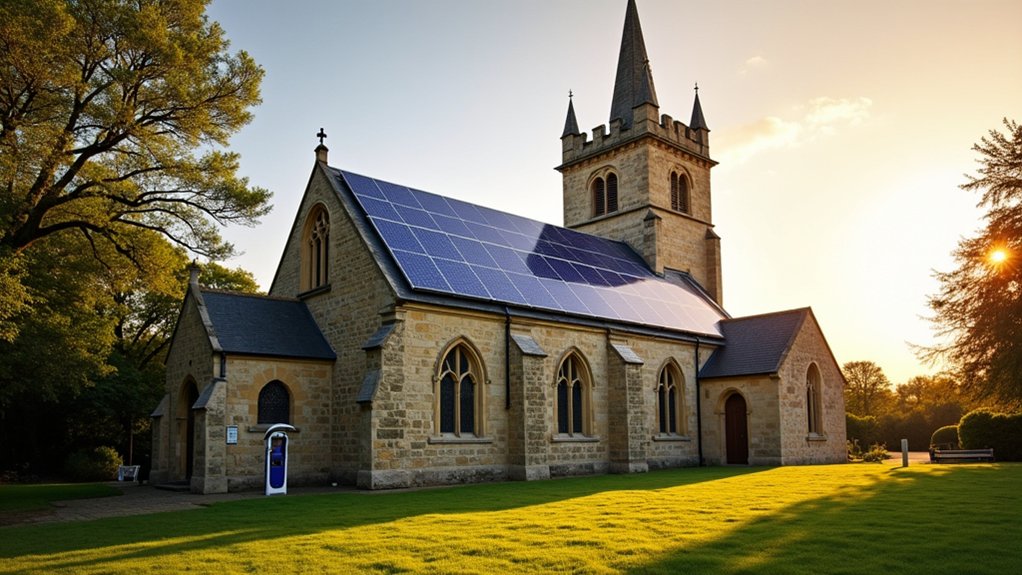
As the global push toward renewable energy gains momentum, the Pattern Church in Swindon has joined the eco-friendly movement by applying for planning permission to install solar panels in March 2025. The church, the largest in the Swindon area, represents a growing trend among religious institutions seeking to reduce operational costs while demonstrating environmental stewardship.
The installation process for these panels typically spans from a few days to two weeks, depending on project scope and weather conditions. I’ve seen similar projects completed remarkably efficiently when proper pre-installation assessments are conducted. Some historic churches opt for solar photovoltaic slates rather than traditional panels, preserving architectural integrity while harnessing renewable energy.
Solar panel installation blends modern efficiency with historic preservation when thoughtfully implemented.
Financial benefits for Pattern Church will be substantial. Churches that implement solar technology report significant reductions in energy expenditure, with savings being redirected into vital community services. The Smart Export Guarantee scheme allows these institutions to generate additional income by selling surplus electricity back to the grid, creating a revenue stream that didn’t previously exist.
The environmental impact cannot be overstated. The average church consumes approximately ten times the energy of a residential property and produces carbon emissions proportionally. Solar installations dramatically reduce this footprint, helping churches achieve Bronze and Silver Eco-Church awards, prestigious recognitions in the faith community.
Energy independence represents another important advantage. Solar panels substantially offset church energy use, particularly during summer months, while battery systems guarantee operational continuity during grid failures. The Diocese of Bristol has already installed solar PV panels on dozens of properties, demonstrating the viability of this approach.
Modern solar technology offers aesthetically pleasing solutions that harmonize with church architecture. The Pattern Church’s initiative will likely showcase how renewable technology can complement traditional designs without compromising historical character. A thorough energy audit will be essential for creating a tailored solar system that meets their unique energy profile. Skilled professionals ensure that installations are performed with precise craftsmanship to preserve the architectural significance of these historic structures.
Beyond practical benefits, solar-powered churches inspire congregations and communities to embrace sustainability. They serve as powerful educational platforms, demonstrating that environmental responsibility and fiscal prudence can coexist within treasured community institutions. These churches don’t just preach stewardship—they practice it.