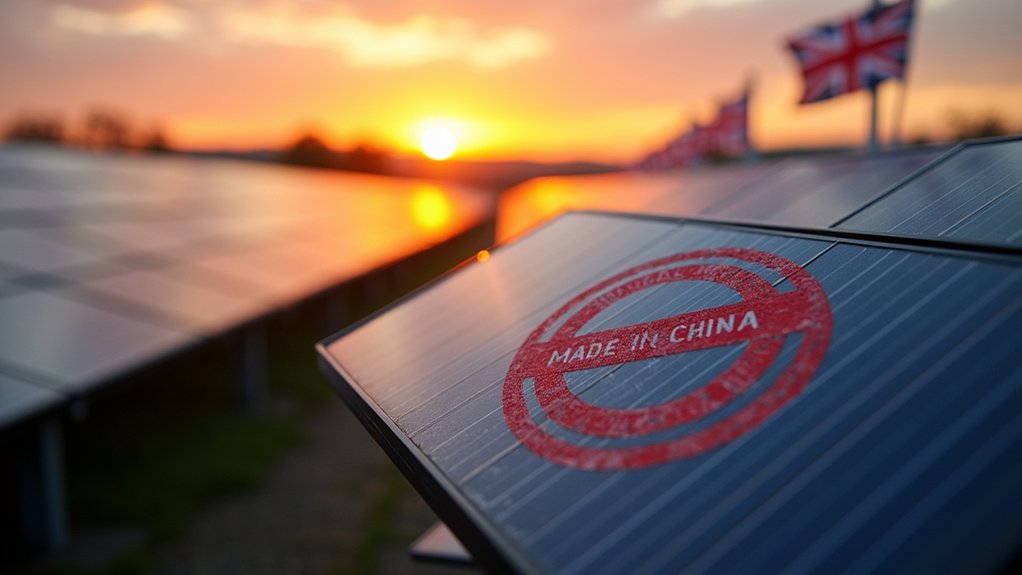

After weeks of mounting pressure from both within and outside his party, Energy Secretary Ed Miliband has executed a significant policy reversal, committing GB Energy to ban solar panels linked to forced labor practices in China. The decision follows substantial evidence of human rights abuses in Xinjiang province, where a dominant share of global polysilicon production occurs amid allegations of Uighur forced labor.
The government has introduced a legislative amendment prohibiting GB Energy from utilizing solar panels, wind turbines, and batteries produced with suspected forced labor. This represents a complete turnaround from Labour’s earlier position, when they instructed MPs to vote against a similar House of Lords proposal—a stance that prompted internal revolt and public criticism.
China currently dominates the photovoltaic supply chain, controlling approximately 80% of global solar component manufacturing. This market concentration has created a difficult balancing act for countries pursuing rapid decarbonization while maintaining ethical procurement standards.
The global solar market’s Chinese dominance forces nations to navigate between climate ambitions and ethical imperatives when sourcing green technologies.
The policy shift will likely create significant logistical challenges. The UK’s ambitious net-zero targets may face delays as alternative supply chains for “slavery-free” solar components remain underdeveloped. I’ve observed similar supply bottlenecks emerging in other markets that have implemented comparable restrictions.
Cost implications could be substantial. Solar installations at schools, hospitals, and commercial facilities may become more expensive, potentially slowing deployment rates across the public sector. The torque of this policy change will reverberate throughout the renewable energy ecosystem.
Parliamentary dynamics reveal the complexity of the issue. Multiple Labour MPs defied party leadership before the reversal, highlighting the tension between climate urgency and human rights obligations. The debate was marked by low MP turnout despite the severity of the modern slavery concerns being discussed. This legislative tussle demonstrates the difficulty in aligning ethical sourcing with decarbonization timelines. MP Alex Sobel proposed an amendment to empower the anti-slavery commissioner for evidence assessment regarding forced labor in supply chains.
For GB Energy, the restrictions necessitate development of new supplier relationships outside China, likely increasing procurement costs and project timelines. The policy represents a clear prioritization of human rights considerations within the UK’s renewable energy framework, though implementation challenges remain significant.