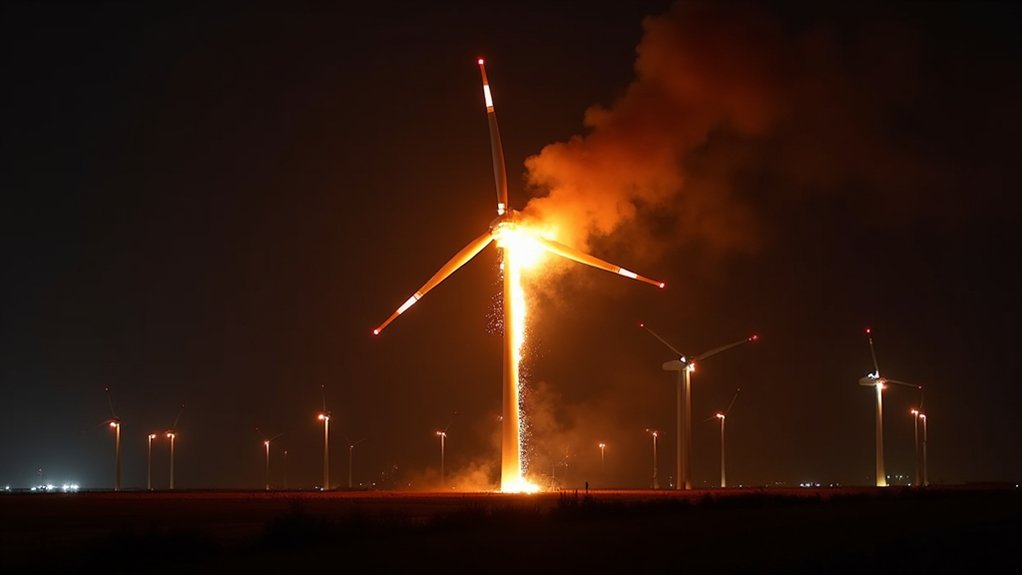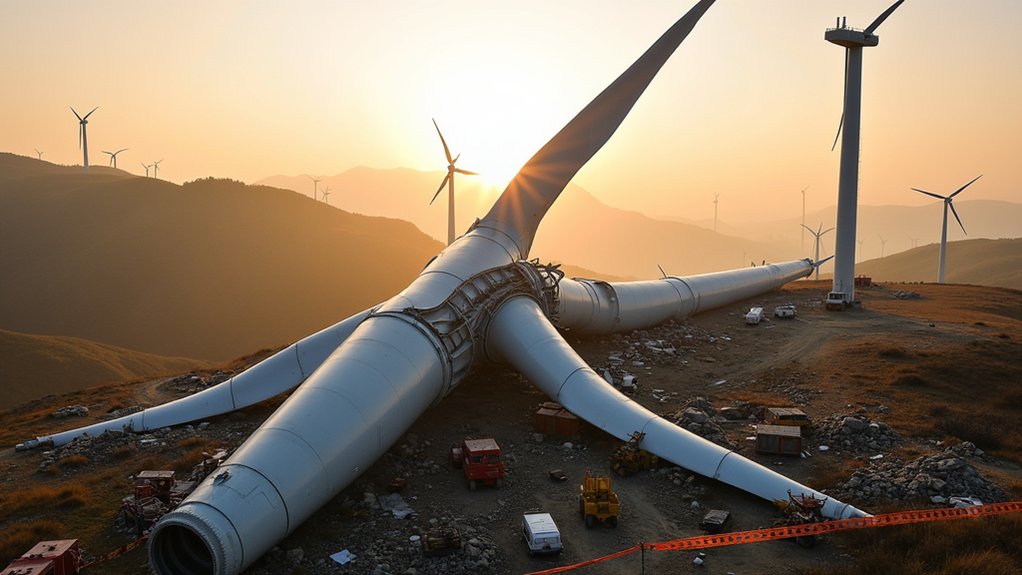

While South Korea continues its push toward renewable energy sources, a significant setback occurred when a wind turbine at the Geumseongsan Wind Power Plant catastrophically collapsed in the early morning hours of April 21, 2025. Local officials in Hwasun-gun, Jeonnam confirmed the structural failure, which took place at approximately 2:50 a.m. Fortunately, no injuries or casualties have been reported.
The collapse follows a period of extreme weather conditions across the Korean peninsula. Just eight days prior, on April 13, South Korea experienced episodes of strong winds that caused widespread structural failures and power outages nationwide. These conditions merit consideration in the ongoing investigation, though direct causality hasn’t been established. The pattern resembles incidents I’ve documented internationally, where environmental stressors combine with technical vulnerabilities. Similar to the Nebraska incident, equipment failure often causes these dangerous situations at wind farms.
Debris from the collapsed turbine scattered across a substantial area, suggesting a catastrophic mechanical failure rather than a controlled breakdown. Initial assessments point toward potential blade detachment or operational malfunctions—common precursors in similar incidents globally. The widely dispersed wreckage indicates a high-energy failure event, consistent with sudden mechanical rupture at critical structural points.
The economic implications extend beyond the immediate replacement costs. The Geumseongsan facility contributes to South Korea’s renewable energy targets, and this incident will temporarily reduce output capacity. Insurance premiums will likely spike, while investor confidence could waver in the regional wind power sector.
A multidisciplinary investigative team has been assembled, analyzing structural components, operational logs, and environmental data. The area remains cordoned off as technicians examine failure points for material fatigue, installation defects, or design flaws. Meanwhile, remaining turbines at the plant undergo additional safety protocols and monitoring. This marks the fifth in a series of investigations, with four previous turbine collapses already studied extensively.
The Geumseongsan collapse mirrors previous incidents documented in the US and Ireland, where GE investigations identified multiple contributing factors. These typically include material degradation, operational stress accumulation, and environmental extremes—a perfect storm of conditions that can compromise even cutting-edge renewable energy infrastructure.