While the UK government’s initial plan to ban hybrid vehicles by 2030 represented an aggressive push toward full electrification, recent policy adjustments have created considerable ripples throughout the automotive sector. The extension to 2035 acknowledges several vital realities facing both industry and consumers. With a £14 billion annual contribution to the economy, the auto sector’s stability can’t be taken lightly.
Toyota and Nissan, major players with substantial UK manufacturing footprints, have expressed legitimate concerns about accelerated change timelines. Their hybrid technologies serve as essential stepping stones toward full electrification, offering consumers a familiar yet progressively greener option.
Established automakers champion hybrid technology as a crucial bridge toward emission-free mobility, not merely a transitional compromise.
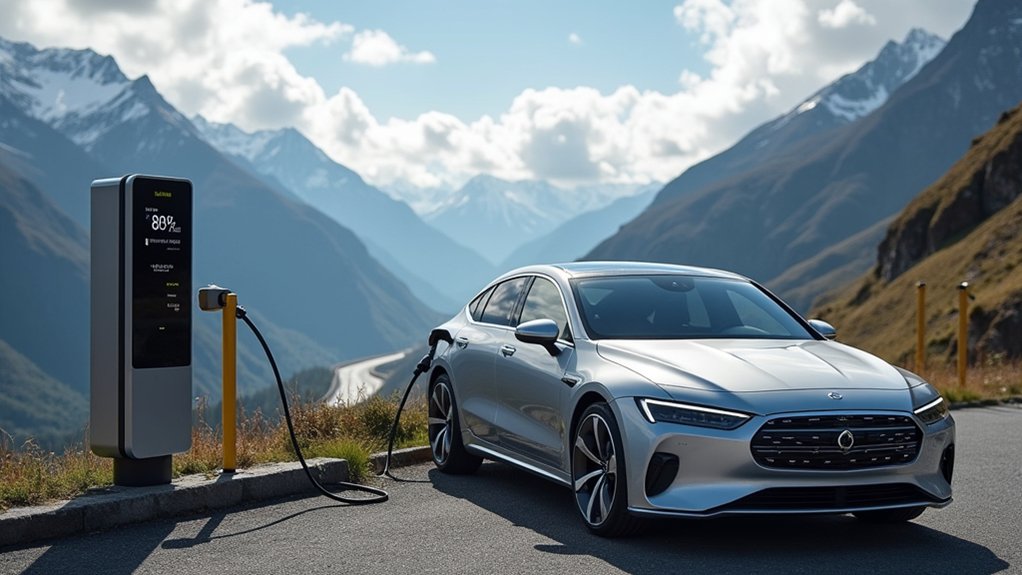
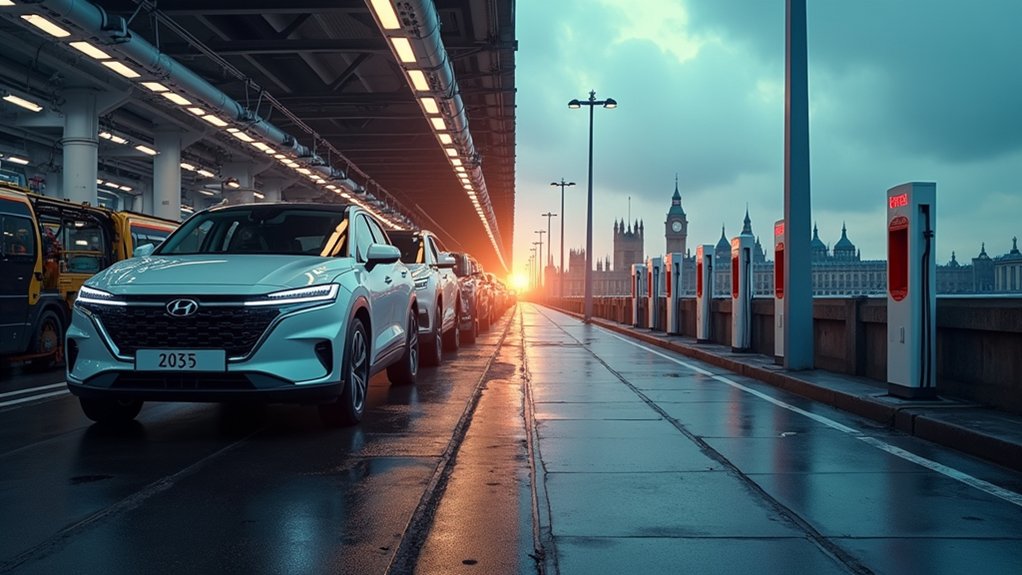
I’ve observed that smaller carmakers producing under 2,500 units annually benefit from regulatory exemptions, creating an uneven competitive landscape. The government’s exemption is specifically designed to ease pressure on these manufacturers while they work toward transitioning to electric vehicles. The ZEV Mandate will require 28% of cars to be fully electric by 2025, creating clear targets for manufacturers to meet. The consumer landscape simply isn’t primed for a wholesale switch to EVs by 2030. The infrastructure gap remains intimidating – fewer than 50,000 public charging points currently exist against a projected requirement of 300,000.
EV pricing continues to outpace hybrid alternatives, with the second-hand market for electric vehicles still in its infancy. Rural communities face particular challenges with charging accessibility. Grid capacity issues loom large, requiring substantial investment to support widespread EV adoption. Studies show that smart charging solutions could significantly optimize grid utilization and reduce infrastructure costs through load balancing capabilities.
The five-year extension provides breathing room for these infrastructure developments to materialize. Environmental purists may view the hybrid extension as a compromise on climate goals. True, PHEVs and full hybrids still produce emissions, albeit considerably lower than conventional ICE vehicles.
Yet the change period allows battery technology to mature while recycling processes develop. The ZEV mandate creates a regulatory framework that larger manufacturers must navigate carefully. While Toyota welcomes the hybrid extension, advocacy groups continue pushing for accelerated pure EV adoption.
Ultimately, the 2035 timeline represents a pragmatic balance between environmental ambition and market realities. The auto industry requires reasonable adaptation periods, and consumers need time to embrace new technologies without feeling economically penalized or functionally limited.